Sunday, January 15, 2012

Newly Released Transcripts Reveal the Federal Reserve's Incompetence


More than four years into the start of The Long Emergency, one astonishing aspect of the crisis is that so many people still retain their faith in the system and that their so-called "leaders" are wise and all knowing and will do the right thing and see us through to a glorious economic recovery. Even though there are overwhelming indicators that the government and banking officials charged with running the economy are incompetent dolts whose groupthink is so pervasive that they are unable to see what is right in front of their eyes, most people still believe and put their trust in them. I guess in a way we should be thankful for that, because an overwhelming loss of that faith would no doubt cause a nearly instantaneous economic collapse.

Up until now, however, those few of us who actually understand what has been going on have only been able to speculate about the incompetence of our economic stewards, particularly at the Federal Reserve. What we lacked was hard evidence of just how the disastrous decisions leading up to the crisis were being made. Thanks to a New York Times story printed on Thursday, however, the true story of the Fed's utter cluelessness is now out there for all to read:
As the housing bubble entered its waning hours in 2006, top Federal Reserve officials marveled at the desperate antics of home builders seeking to lure buyers.
The officials laughed about the cars that builders were offering as signing bonuses, and about efforts to make empty homes look occupied. They joked about one builder who said that inventory was “rising through the roof.”

But the officials, meeting every six weeks to discuss the health of the nation’s economy, gave little credence to the possibility that the faltering housing market would weigh on the broader economy, according to transcripts that the Fed released Thursday. Instead they continued to tell one another throughout 2006 that the greatest danger was inflation — the possibility that the economy would grow too fast.

“We think the fundamentals of the expansion going forward still look good,” Timothy F. Geithner, then president of the Federal Reserve Bank of New York, told his colleagues when they gathered in Washington in December 2006.

Some officials, including Susan Bies, a Fed governor, suggested that a housing downturn actually could bolster the economy by redirecting money to other kinds of investments.

And there was general acclaim for Alan Greenspan, who stepped down as chairman at the beginning of the year, for presiding over one of the longest economic expansions in the nation’s history. Mr. Geithner suggested that Mr. Greenspan’s greatness still was not fully appreciated, an opinion now held by a much smaller number of people.

Meanwhile, by the end of 2006, the economy already was shrinking by at least one important measure, total income. And by the end of the next year, the Fed had started its desperate struggle to prevent the collapse of the financial system and to avert the onset of what could have been the nation’s first full-fledged depression in about 70 years.

The transcripts of the 2006 meetings, released after a standard five-year delay, clearly show some of the nation’s pre-eminent economic minds did not fully understand the basic mechanics of the economy that they were charged with shepherding. The problem was not a lack of information; it was a lack of comprehension, born in part of their deep confidence in economic forecasting models that turned out to be broken.

“It’s embarrassing for the Fed,” said Justin Wolfers, an economics professor at the University of Pennsylvania. “You see an awareness that the housing market is starting to crumble, and you see a lack of awareness of the connection between the housing market and financial markets.”

“It’s also embarrassing for economics,” he continued. “My strong guess is that if we had a transcript of any other economist, there would be at least as much fodder.”
The whole article is quite lengthy and worth reading in its entirety. What's truly amazing is how the mantra was repeated after the 2008 market crash that "nobody could have predicted" that the housing market would be a catalyst for tanking the entire economy. Which was complete and utter bullshit. There were plenty of voices predicting what would happen, they just weren't allowed to be heard in those Federal Reserve meetings.

Even more amazing is how none of these people who completely blew the most important call of their professional lives have suffered any negative career consequences as a result. Geithner, who comes off as particularly clueless in this article, was of course subsequently installed by President Hopey-Changey as his Treasury Secretary. That's how it works in America these days. "Accountability" is only a word that applies to the little people. The movers and shakers have nothing to fear in that regard, no matter how badly they fuck up.

So today, these same feckless SOBs are still running the economy, and the vast majority of the population still retain their faith in them. But you have to wonder how much longer that can possibly remain the case.


Bonus: So when did Alicia Silverstone join the Federal Reserve?

Thursday, April 7, 2011

Use the Dollar or Else

Related Posts Plugin for WordPress, Blogger...


Only use our monopoly money.
Terrorists use silver and gold
Dees Illustration
Llewellyn H. Rockwell Jr.
Lew Rockwell

Look up the phrase "a unique form of domestic terrorism" on a search engine and you will turn up a story about a man whom the US government is trying to cage from now until the time of his death.

And his crime? His unique form of terrorism? He minted silver and copper coins and sold them. In other words, he did what innumerable entrepreneurs from the beginning of time have done. He attempted to provide consumers with a store of value. No one was forced to buy. He met a market demand, and that’s it.

Whom did he hurt? No one. Unlike illegal drugs, which the government bans on grounds that it doesn’t want us to hurt ourselves, these silver coins did not endanger their users. They only gave people an option on what to do with their money. Did the proprietor attempt to claim that these were legal tender for monetary exchange? No, he sold them for what they are.
Could people use them for money? Yes, but people can use anything for money: shoes, shells, flash drives, or books. Whether something is money or not depends on the intentions behind the exchange. Do you acquire something to consume it? It is not money. Do you acquire something in order to trade it for something else? In that case, it takes on money-like properties.


It is wholly understandable that people have doubts about the future of the paper dollar. Many people are seeking alternatives, in their own financial interest. What this proprietor did was provide something that turned out to be a possible alternative to the dollar. And for that, and that alone, he is being hounded and destroyed.

His name is Bernard von NotHaus and he is 67 years old. In the course of the proceedings, he was called every name imaginable. He was called a crook, a terrorist, a crank, and a crazy man. What he actually did, however, should be fully legal and encouraged in any nation, in all times and all places.

A nation that is confident about its money’s future would not fear currency competition. A nation with a dying money uses every possible means to crush the competition. That is precisely what is happening in the case of the so-called Liberty Dollar.

What’s striking here is that no one believes there is any reason to argue the point. It is obvious to his persecutors that he is a criminal. "He's playing on a core idea of the radical right, that evil bankers in the Federal Reserve are ripping you off by controlling the money supply," said Mark Potok of the Southern Poverty Law Center. "He very much exists in the world of the anti-government patriot movement, whatever he may say. That's who his customers are."

Read Full Article

RELATED ARTICLE:
Monetary Reform Begins with Competing Currencies


Enter your email address to subscribe to our newsletter:


Delivered by FeedBurner

Tuesday, April 5, 2011

The Fed Undermines Foreign Policy

Dees Illustration
Dr. Ron Paul

Last week I was both surprised and pleased when the Supreme Court upheld lower court decisions requiring the Federal Reserve Bank to comply with requests for information made by Bloomberg under the Freedom of Information Act ("FOIA"). Bloomberg simply wanted to know who received loans from the Fed's discount window in the aftermath of the 2008 financial market crisis, and how much each entity received. Surely this is basic information that should be available to every American taxpayer. But the Fed fought tooth and nail all the way to the Supreme Court to preserve their privileged secrecy. However, transparency and openness won the day. There are some 29,000 pages to decipher, but a few points stand out initially.

The Fed lent huge sums of our money to foreign banks. This in itself was not surprising, but the actual amount is staggering! In one week at the height of the crisis, about 70% of the money doled out went to foreign banks. We were told that bailing out banks was going to stave off a massive depression. Depression for whom? We now know that the Fed's bailout had nothing to do with helping the American people, who have gotten their depression anyway with continued job losses and foreclosures. But now we learn that a good deal of the money did not even help American banks!
In light of recent world events, perhaps the most staggering revelation is that quite a bit of money went to the Arab Banking Corp., in which the Libyan Central Bank owned about a third of its stock. This occurred while Libya, a declared state sponsor of terrorism, was under strict economic sanctions! How erratic the US must appear when we shower a dictator alternately with dollars and bombs! Also, we must consider the possibility that those loans are inadvertently financing weapons Gaddaffi is using against his own people and western militaries. This would not be the first time the covert activities of the Fed have undermined not only our economy and the value of the dollar, but our foreign policy as well.

Of course I can't say I'm surprised by the poor quality of the data provided by the Fed. The category of each loan made, whether from the "Primary Discount Window", the "Secondary Discount Window," or "Other Extensions of Credit," is redacted. Thus, we don't know with certainty how much discount window lending was provided to foreign banks and how much was merely "other extensions of credit". Also, some of the numbers simply do not seem to add up. We are of course still wading through the massive document dump, but it does seem as though several billions of dollars are unaccounted for.

As the world economy continues to falter in spite of -- or rather because of -- cheap money doled out by the Federal Reserve, its ability to deceive financial markets and American taxpayers is coming to an end. People are beginning to realize that when the fed in effect doubles the worldwide supply of US dollars in a relatively short time, it has the effect of stealing half your money through reduced purchasing power. Rapid inflation will continue as trillions in new money and credit recently created by the Fed flood into the commodity markets.

It is becoming more and more obvious that the Fed operates for the benefit of a few privileged banks, banks that never suffer for bad decisions they make. Quite the opposite - as we have seen since October 2008, under our current monetary system politically-connected banks are paid to make bad decisions.


Purchase Gold American Eagles from APMEX.com Today


Related Posts Plugin for WordPress, Blogger...
Enter your email address to subscribe to our newsletter:


Delivered by FeedBurner

Saturday, April 2, 2011

US Fed loaned Libya-backed bank billions

Dees Illustration
AFP

WASHINGTON (AFP) - The Federal Reserve lent a Libyan state-backed bank billions of dollars during the financial crisis, documents made public on Thursday have revealed.

The Arab Bank Corporation, which is today 59.3 percent owned by the Libyan government, borrowed in slices as big as $1.175 billion from the US central bank.

At the time the bank was not majority owned by the Tripoli government; other shareholders included the Kuwait Investment Authority and the Abu Dhabi Investment Authority.
The Bahrain-headquartered firm appears frequently in the Fed's records of its emergency short-term lending facilities between March 2009 and March 2010.


Since then the United States has slapped sanctions on the Libyan regime and sought to isolate Moamer Kadhafi and his top lieutenants.

The Arab Bank Corporation, which is chaired by the head of Libya's state investment fund, however is not subject to Libyan sanctions.

But some US lawmakers were incredulous about the Fed lending to the Libyan-government backed banks.

Democrat-allied Senator Bernie Sanders said the Fed made "46 emergency, low-interest loans" to the bank, providing a total of $26 billion in credit, though not at one time.

"It is incomprehensible to me that while creditworthy small businesses in Vermont and throughout the country could not receive affordable loans, the Federal Reserve was providing tens of billions of dollars in credit to a bank that is substantially owned by the Central Bank of Libya."

The Fed records show huge numbers of short-term liquidity loans made to American banks and the US units of banks from all over the world at the peak of the financial crisis, many for far larger sums.

A New York unit of the French-Belgian bank Dexia, which had huge potential liabilities in guarantees on municipal bonds, garnered loans for as much as $33.5 billion.

© AFP -- Published at Activist Post with license


Invest In Silver American Eagles Now


Related Posts Plugin for WordPress, Blogger...
Enter your email address to subscribe to our newsletter:


Delivered by FeedBurner

Monday, March 28, 2011

Why You Should be Freaked Out About the Stock Market

Related Posts Plugin for WordPress, Blogger...

Phoenix Capital Research
Zero Hedge

I doubt you will see this chart in the mainstream media any time soon... if EVER.


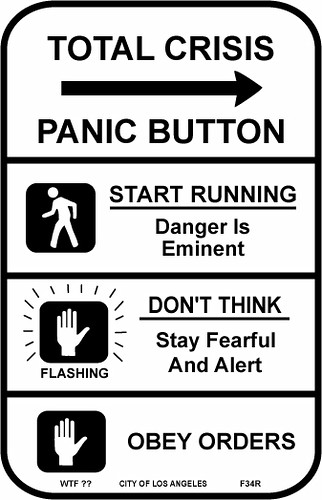
This is a chart of the US monetary base. In simple terms, it charts how much money the Fed has pumped into the system (at least that it admits). So it’s a kind of visual of the Fed hitting the PANIC button: when the monetary base explodes higher, the Fed is FREAKING out.

You'll note that during the Financial Crisis the Fed didn't do much until the autumn of 2008 when it pumped nearly $1 trillion into the system. Think about that, the Fed didn’t go nuts pumping money until the stuff REALLY hit the fan.

You'll also note that there's only one other time when the monetary base went absolutely vertical: TODAY.

Indeed, the Fed has pumped nearly $500 billion into the system since the start of 2011. Don't even try to tell me  this is QE 2. If it was then the monetary base should have spiked in late 2010, NOT in 2011.

Read Full Article


Buy Gold Online Today at APMEX.com  


Enter your email address to subscribe to our newsletter:


Delivered by FeedBurner
order non hybrid seeds

Wednesday, March 23, 2011

Fed Stress Test a Farce

Greg Hunter
USA Watchdog

Last Friday, the Federal Reserve announced it completed its so-called Fed stress test on 19 of the country’s largest banks. Improved financial health allows some banks to “increase or restart dividend payments, buy back shares, or repay government capital.” The news was met by some mainstream media outlets with jubilation, even though the Fed did not disclose which banks did well and which banks did not.  However, Wells Fargo, J.P. Morgan, U.S. Bancorp and BB&T were some of the banks that almost immediately announced dividend increases.  The Fed said, “The return of capital to shareholders under appropriate conditions is a step in the process of improvement in the financial sector and will help to promote banks’ long-term access to capital. Such access will support lending to consumers and businesses.”(Click here to read the complete Federal Reserve press release and report.) 

Funny, I thought the bank bailout was supposed to encourage more lending.  The dividend increases will fatten the paychecks of bank executives, but I don’t see lending taking off anytime soon.  There was plenty of information about what went into the Fed assessment of the financial health of the banks, but “mark to market accounting” was not mentioned one single time in any release or report I read from the Fed.  “Mark to market accounting” is simply valuing an asset for what you can get for it today.  It has been a standard method of accounting much of the 20thcentury, and it is how the IRS values assets.

Read Full Article 
Invest In Silver American Eagles Now

Related Posts Plugin for WordPress, Blogger...
Enter your email address to subscribe to our newsletter:


Delivered by FeedBurner
order non hybrid seeds

Tuesday, March 22, 2011

US Fed to release crisis bailout data


© AFP/File Karen Bleier
AFP

WASHINGTON (AFP) - The US Federal Reserve said Monday it would release data on its emergency aid to banks after the Supreme Court rejected arguments to keep it secret.

The Supreme Court declined to review a ruling that forces the Fed to publish the names of banks that borrowed from its discount window in April and May 2008, months before the industry fell into a panic.
The discount window is a Fed facility banks can tap for short-term financing when they experience liquidity shortages, as some did when financial markets began to crumble with the housing market crash.

The Supreme Court's decision effectively backed a request by the Bloomberg news agency and Fox News television to make the data on the Fed's bailout moves public, despite banks and the Fed arguing this could damage perceptions of their stability.

According to the decision, the Fed will have to reveal within five days the names of the banks which received discount window loans, along with the amount, the term, and the counterparty guarantees for the loans.

"The board will fully comply with the courts' decisions and is preparing to make the information available. Some of the information relating to emergency credit facilities was already released on December 1," Fed spokesman David Skidmore said.

The Fed had refused to reveal the information, on the grounds that it could erode public confidence in the specific institutions involved and create more difficulties for the struggling finance sector.

© AFP -- Published at Activist Post with license


Enter your email address to subscribe to our newsletter:


Delivered by FeedBurner
order non hybrid seeds

Monday, March 21, 2011

Supreme Court Rules The Fed Has 5 Days to Release Records to Bloomberg


Dees Illustration
Zero Hedge

In a crushing blow against the Fed and the banks that own it, in this case represented by the Clearing House Association, the Supreme Court rejected an industry appeal set forth by the CHA, that sought to keep critical bailout data from going public. The lawsuit was originally started by the great and late Mark Pittman, who tragically passed away around Thanksgiving 2009: we are confident we would be delighted to learn that his unprecedented act of suing the Fed in order to generate more transparency has finally succeeded.

From Bloomberg:

The justices today left intact a court order that gives the Fed five days to release the records, sought by Bloomberg News’s parent company, Bloomberg LP. The Clearing House Association LLC, a group of the nation’s largest commercial banks, had asked the Supreme Court to intervene.
The order marks the first time a court has forced the Fed to reveal the names of banks that borrowed from its oldest lending program, the 98-year-old discount window. The disclosures, together with details of six bailout programs released by the central bank in December under a congressional mandate, would give taxpayers insight into the Fed’s unprecedented $3.5 trillion effort to stem the 2008 financial panic. 
“I can’t recall that the Fed was ever sued and forced to release information” in its 98-year history, said Allan H. Meltzer, the author of three books on the U.S central bank and a professor at Carnegie Mellon University in Pittsburgh.
Read Full Article


Enter your email address to subscribe to our newsletter:


Delivered by FeedBurner
order non hybrid seeds

Saturday, March 19, 2011

Fed, Bank of Canada confirm yen sales


© AFP/File Yoshikazu Tsuno
AFP

WASHINGTON (AFP) - The US Federal Reserve and Bank of Canada confirmed Friday that they had intervened to cool the soaring yen, in concert with other G7 central banks.

The Fed said its New York branch sold yen to curb the yen's rise.

Japan and its economic allies announced Thursday they would intervene in world currency markets for the first time in a decade to calm turmoil sparked by a huge earthquake, tsunami and a deepening nuclear crisis.

The pledge came after emergency telephone talks by the Group of Seven nations in response to a surge in the yen, which threatened the Japanese economy's recovery prospects.

Dow Jones Newswires reported the US central bank had sold off 50 billion dollars worth of the Japanese currency.

Canada's central bank also confirmed Friday that it had acted on the declaration.

"(The) Bank of Canada joins concerted intervention by selling Japanese yen," it said in a statement.

© AFP -- Published at Activist Post with license


Enter your email address to subscribe to our newsletter:


Delivered by FeedBurner
order non hybrid seeds

Tuesday, March 15, 2011

US Fed to meet as global crises loom large


The US Federal Reserve building
© AFP/File Karen Bleier

WASHINGTON (AFP) - The Federal Reserve's top policymakers meet Tuesday with an upbeat US economic outlook clouded by a devastating earthquake and tsunami in Japan and unrest in the Middle East.

The Fed's rate-setting panel is expected to keep stimulus policies in place -- including ultra-low interest rates -- even as unemployment eases, consumer spending picks up and businesses grow more optimistic.

"We anticipate a more upbeat assessment of the economy and a less pessimistic tone towards the labor market," said Fabio Fois of Barclays Capital.

The Fed is expected to continue to unfurl a $600 billion stimulus spending designed to jolt the US economy back to full health, but one which critics warn is a risky gambit that is stoking inflation.

The Fed is expected to wave off concerns about rising prices, which have only been fueled by fighting in Libya that has pushed up the cost of oil.

With Americans struggling to pay gasoline prices that have risen around 43 cents a gallon (3.8 liters) in the last month to an average of $3.54, the Fed has insisted that core inflation remains in check.

The Fed's measure of inflation ignores volatile food and energy prices, which are often the costs most keenly felt by consumers.

On Friday the head of the powerful New York Federal Reserve, William Dudley, said inflation levels remained well below the two percent rate which the bank says spells a healthy economy.

"Inflation expectations are well-anchored today and we intend to keep it that way," Dudley said.

But as the economy improves, pressure is building on the Fed to ease its stance.

The central bank "will have to change its inflation language," John Ryding and Conrad DeQuadros of RDQ Economics said in a client note.

"Core inflation has stabilized and picked up slightly, oil and commodity prices have increased significantly, and inflation expectations have risen."

"The Fed, we believe, is on the wrong side of the inflation story."

But events in Japan may have eased pressure on the Fed to reverse course.

The economic impact of a massive earthquake and tsunami in Japan -- the world's third-largest economy -- is still unknown, although few believe a serious spillover is likely.

"Our early assessment is that Japan's GDP will take a hit for a quarter or two, but then bounce back as reconstruction gets into gear," said Patrick Newport of IHS Global Insight.

But coupled with rekindled sovereign debt crisis in Europe that saw Spain and Greece's sovereign ratings downgraded in the past week, and rising oil prices, the potential exists for an external brake on US growth.

Against this backdrop the Fed is expected to stand pat.

"The economic outlook has improved considerably in the past six months," according to Dudley that was the aim of the Fed's strategy "this is welcome and not a reason to reverse course."

But some experts believe the Fed might soon do just that.

"This is likely to be the last gathering before the Fed has to begin prepping the markets for the end of QE2," said Stephen Stanley of Pierpont Securities using the jargon name for the Fed's easy monetary policy -- quantitative easing.

© AFP -- Published at Activist Post with license
Purchase Silver Canadian Maple Leafs Online Today

Enter your email address to subscribe to our newsletter:


Delivered by FeedBurner
order non hybrid seeds

Wednesday, January 23, 2008

There may be blood


For best performance in the face of a total disaster, the nominees are…

The twin faces of America’s global economic power stared into the abyss Tuesday morning. Profound fears about the possibility of a U.S. recession dovetailed with unfolding internal crises in the American financial and entertainment sectors, casting doubt on the status of each as dominant global industry players.

In Los Angeles, concern over the ongoing Writers Guild of America (WGA) strike overshadowed the normally festive Oscar nomination ceremony. The potential cancellation of the Academy Awards broadcast in February has cast a pall over the American film business since the WGA went on strike November 5. For industry insiders, one nightmare has already come to pass. Earlier this month, the Golden Globes awards ceremony was reduced to a press conference when actors and actresses refused to cross the WGA picket line.

"I could never cross a picket line. I think there's a lot of people who feel that way," Tony Gilroy told the Associated Press. Gilroy was nominated for Best Director for his work on the film Michael Clayton, starring George Clooney.

The Oscars are often the second-most-watched television program of the year following the Super Bowl. The film industry sees these broadcasts as more than an opportunity to promote individual films – they are commercials for the Hollywood brand name. According to the Motion Picture Association of America, worldwide box office receipts reached $25.82 billion in 2006, an all-time high. The big film studios see the loss of the awards season showcases as damaging to more than just the short-term bottom line.

Potential competitors could conceivably take advantage of this moment of weakness in Hollywood. In 2006, India's film industry had gross revenues topping $2 billion worldwide. But not everyone is convinced that the time is right for Bollywood to make a power move.

“There is a reason that Hollywood movies travel so well all around the world,” Dan Petrie, Jr., one time president of the WGA told me last week. “The best people – the writers, the directors, the actors – come to Hollywood to work. Any labor dislocation would have to go on so long that international talent would decide to stay at home.”

And how long would that be? The last writer’s strike, in 1988, lasted 5 months, costing the industry $500 million in lost revenue. But in Hollywood, hope springs eternal as nowhere else. News that talks between the WGA and the Alliance of Motion Picture and Television Producers would resume on Tuesday cheered Academy president Sid Ganis. “[The February 24th Academy Awards show] will be a night to remember!” he pronounced.

Meanwhile, three thousand miles away, the other pillar of U.S. soft power was threatening to come unmoored. Wall Street market traders, fed watchers and financial professionals watched from the sidelines Monday as news of massive stock market sell-offs in international markets trickled in. Triggered by a 5.6 percent plunge of the Tokyo Stock Exchange, the threat of global economic recession moved quickly westward across the globe. Equity valuations fell like dominoes in Hong Kong, Seoul, Mumbai, Frankfurt, Paris and London. U.S. markets, closed for the Martin Luther King, Jr. holiday, were temporarily spared.

The worldwide market tumble grew out of concerns that the ongoing housing downturn and credit crunch could lead to recession in the U.S.. Overnight, central bankers and Ministers of Finance around the world struggled to enact emergency policy measures. In an early morning statement designed to cushion the impact on U.S. markets, the Federal Reserve announced it would slash interest rates by 75 basis points to 3.50 percent. This was the largest single rate cut in the U.S. since 1982.

The Federal Open Market Committee, the Fed’s monetary policy brain trust, released a statement explaining the historic move: “The Committee took this action in view of a weakening of the economic outlook and increasing downside risks to growth.” Like Sid Ganis, Treasury Secretary Henry Paulson put on a brave face during a morning press conference. “This [rate cut] shows the world that our central bank is nimble and able to move quickly to respond to market conditions. That should be a confidence builder,” he said.

But reactions to the rate cut were mixed. The Dow Jones Industrial Average fell 400 points after the opening bell. London’s FTSE 100 eked out a positive performance while Asian markets trended downward for the second straight day. The VIX, the Chicago Board Options Exchange Volatility index, often referred to as the “fear index,” rose to its highest level since 2002.

“The Fed has been lagging the curve in cutting rates up until now. This borders on panic,” David Jones, President and CEO of DMJ Advisors told Bloomberg Radio.

And whether in Hollywood or on Wall Street, panic is not a word that markets like to hear. Indeed, there has been considerable recent speculation – some would call it panic – that the world center of global finance could be shifting away from New York. For twenty years, London has been prepping for a return to international glory as the world’s money capital. Hedge funds and financial services firms have clustered in its city center. The London Stock Exchange has benefited from companies seeking to avoid onerous U.S. regulatory statutes, such as the Sarbanes-Oxley legislation, when listing their initial public offerings. The British capital also derives an advantage from its relative proximity to the emerging markets of Asia and Russia.

"New York is in danger of becoming a secondary city instead of the world capital it deserves to remain," said Dan Doctoroff, New York Mayor Michael Bloomberg’s Deputy for Economic Development, in 2007.

Recent news does not bode well for the continued global dominance of the U.S. film and financial industries. The risks to both are mounting by the day. If the Fed hopes its interest rate cut will stave off more than a damaging short-term recession, it would be well advised to keep its word by continuing to “act in a timely manner as needed to address those risks.” Otherwise, in New York and Los Angeles, there will be blood.

cc photo by jasonepink