 This is a guest post by Diana Santana and Alberto Turlon from the Carnegie New Leaders program.
Consider a time in your career when you were asked to do something that went against your values. First, recall an instance when you acted in favor of your values. How did you do this? How did you communicate in ways that created change? Now, consider a time when faced with a similar challenge that you failed to voice your values. Why didn't you voice your concerns? Jot down these two stories.
Mary Gentile, educator, author of Giving Voice to Values (GVV), and creator of the GVV curriculum, opened a discussion of her work at a recent Carnegie New Leaders event by asking participants to call on their experiences and consider "A Tale of Two Stories." Adding to this exercise, Gentile recounted the Harvard Business School welcome speech that instructs incoming students to "look to the left of you, look to the right;" know that these are the people that you will call on for the rest of your life when faced with a values conflict. Drawing on one's network and reflecting on previous experiences are just two GVV tools that empower the individual to voice values in the workplace.
The GVV curriculum was born of observations and experiences that led to what Gentile referred to as a "crisis of faith." After Gentile's 10-year tenure at Harvard she began consulting with other top business schools on their business ethics curriculum. Scandals of the late 1990s and early 2000s involving MBAs were reminders that something in the classroom wasn't working. Despite attempts to change business school structure or course offerings, MBAs still exhibited unethical business behaviors. Survey studies released at the time also demonstrated that students were less ethical after completing business ethics courses.
Gentile keenly observed that relying on one's professional network and studying different models of ethical reasoning was not enough to ensure ethical behavior in the future. Something was lacking in the way students were being taught business ethics.
Gentile went on to become a consultant for a project at Columbia Business School. The project invited incoming MBA candidates to write an essay describing their experience with a situation where they were asked to act in a manner that conflicted with their values. The result of perusing some 1,000 essays, in light of earlier research conducted by Douglas Huneke and Perry London on altruism, created the foundation of Giving Voice to Values.
Gentile discovered that individuals who succeeded in communicating their values had at some point communicated their ideal response to another person they admired—a friend, a family member, a mentor, a work ally, a spouse, etc. She determined that this opportunity to pre-script the communication was essential to speaking up for their values in difficult situations.
Giving Voice to Values provides such an opportunity. It is a post–decision-making curriculum that enables individuals to hold strong to their principles and communicate their thoughts in a manner that best suits each individual's personality and communication style. The curriculum does not instruct students on what is right. Rather, it assumes that a values decision has already been determined and instead focuses on equipping people with the confidence to communicate their values.
Gentile recognized in her research that individuals in a professional setting tend to develop "preemptive rationalizations" that serve as excuses when faced with a values conflict. "Maybe I don't have all the information," one might claim. Another might think "this is just the way the industry works." Such excuses, coupled with the individual's sensitivity to their position in the hierarchy, stifle the individual from thinking through other possible scenarios and outcomes. The individual succumbs to the conflicting request despite uneasiness. GVV provides students the opportunity to observe others that have ignored these excuses and have found ways to express their values.
The curriculum encourages students to self-assess how personal goals align with organizational goals, provides exercises that ask the student to communicate their values in challenging situations, and gives students the chance to practice their communication with feedback. Armed with confidence, scripts, and values awareness, individuals are more likely to act on their values and enact positive change within an organization.
Gentile's presentation on GVV development and curriculum was convincing. She demonstrated the need for such a practical curriculum and showed its worth to students and society. It is no wonder the GVV curriculum is employed in organizations and universities all over the world. GVV provides the tools necessary to communicate personally while potentially making positive organizational and systemic change.
The exercises and examples Gentile mentioned were developed primarily for those in business and lacked specific application for those working in government, international organizations, and non-governmental organizations, the primary audience members at the Carnegie New Leaders event. Positive examples of non-business professionals communicating their values in challenging situations would have augmented the already powerful presentation.
Nonetheless, audience members understood that many of the values conflicts that arise in professional situations transcend industry. Each participant understood Gentile's broader message: Every values conflict has a remedy that varies on the individual's professional position, sensitivity, personality, and communication style.
GVV is an innovative approach that explores self-awareness of personal values and communication style. It provides the opportunity to construct and practice responses for a variety of situations. Giving Voice to Values gives values-driven individuals confidence to speak up for what's right, no matter the circumstance.
Thursday, July 7, 2011
Speaking Values with Confidence
Thursday, May 5, 2011
Climate Challenge, or How I Learned to Start Pandering and Love the Pork
 I played the Climate Challenge game recently after discovering it on the Games for Change website and found it to be a provocative look at the politics and policy solutions related to global warming. While the gameplay has a few blind spots (mainly the lack of good feedback on economic performance) and gets a bit repetitive, Climate Challenge communicates and encourages reflection on some important and perennial political lessons.
The gist is that you "play as the President of Europe from 2000 to 2100 [!?], and attempt to reduce your carbon emissions while maintaining vital national services and remaining popular with the electorate." This is tougher than it seems. There are five variables you must monitor—finances, energy, food, water, and emissions—and five policy areas with which to affect these variables—national, trade, agriculture & industry, local, and household. You are evaluated at the end of your public service on indicators of environment, wealth, and popularity.
For my first attempt I figured why not go for broke with an aggressive Green platform: I ended up getting booted out of office after four rounds. My approval rating fell through the floor when I neglected the food supply and the water infrastructure in favor of fuel taxes and rapid expansion of renewable energy, and my administration was punished by climate-induced floods and heat waves that further compounded my popularity problems. Game Over. Chalk it up to the game's learning curve.
Periodically during Climate Challenge, Europe must engage in environmental diplomacy with the other blocs: North America, South America, Africa, South Asia, Pacifica, and North Asia. The negotiation stage is minimal and it's not clear what's at stake, but you have the option to subsidize green development in each region. Presumably these gestures rally the negotiators to your side. But what is your side? While emissions targets give you something to aim for, they also make your job harder.
On my second pass I tried to be a more sensitive leader while still negotiating in good faith for emissions reductions on the international stage. Fortunately the game is loaded with great policy choices with which to meet these goals—energy innovation and efficiency, transportation and green building regulations, and investments in basic research.
I found that one way to keep my rating high was to focus on subsidizing things people wanted, like home solar, and to steer clear of things they didn't, such as carbon taxes—promote, don't restrict—which seems to adhere to what Roger Pielke calls his "iron law" of climate politics.
Climate Challenge also offers some tempting public programs of uncertain value (within the game environment): launch a space program, host the Olympics, send foreign aid. These tend to hemorrhage money, energy, and emissions, but the voters like them.
I played a final round with an exaggerated pro-business approach, funding things like nuclear projects and carbon capture, yet even then I somehow managed to throw the economy into hyperinflation by 2100 and allow criminals to stalk the streets. Clearly the game needs better feedback on the socioeconomic front, as my approval rating ran high throughout.
While the gameplay is just a bunch of clicking, the real action happens on the conceptual level, and there are some nice contextual touches that teach the reality of nimbyism, resource limitations, and political trade-offs. For example, after each election you get a newspaper report on how your policies have been received. My favorite one said: "The most popular policy was 'Spin your policies.'" A few dollars spent on savvy PR can go a long way.
Monday, March 28, 2011
The impossibility of policing "insider information"
The investigations surrounding the Galleon hedge fund insider-trading scandal has provided an opportunity to observe the backroom activities that often underpin the actions of financial market traders and analysts.
In particular, of interest to readers in India, have been the revelations (transcript here and podcast here) that the former Chairman of McKinsey, Mr Rajat Gupta, was constantly passing on critical insider information to Galleon founder Mr Raj Rajaratnam, about investment decisions of firms on whose Mr Gupta was serving. The SEC, as part of its largest insider trading investigations, have found evidence that Mr Gupta passed on information to Mr Rajaratnam immediately after Goldman Sachs board meetings he attended and Mr Rajratnam in turn made investments based on that information.
The investigations have thrown up several examples of such practices. Mr Anil Kumar, a McKinsey director, put his own reputation at risk, and passed insider information about Goldman's clients, in return for $2.6 m. Mr Rajiv Goel, an Intel Manager, has testified that he passed on advance information about the semiconductor group’s earnings to Mr Rajaratnam. There are surely more skeletons that will come tumbling down as the trial progresses.
It is inevitable that insider information on business dealings will be shared during socializing within a closed friendship network of financial market executives. Such information transfers can be either part of party gossip or deliberate leakages. It is inconceivable that atleast some of this information will not be used by some members of the group to make beneficial financial investments (directly or indirectly, through their partners). Since most of these executives are also investors in these markets, the incentive to profit from such opportunities are often irresistible.
In this context, Luigi Zingales points to a working paper by Andrea Frazzini, Christopher J. Malloy, and Lauren Cohen who find that college friendship ties generate a considerable premium. They find that portfolio managers place larger bets on firms that have directors who are their college mates, earning an excess 8% annual return. He writes,
"A benign interpretation of these results is that college mates know each other better; thus, a portfolio manager has an advantage in judging the quality of the CEO better if they spent time with him or her in college. But this benign interpretation is difficult to reconcile with the finding that these positive returns are concentrated around corporate news announcements."
In simple terms, it is almost impossible to police insider information sharing within small friendship networks and investment transactions based thereon. Criminalizing such information disclosure and moral suasion to encourage executives to keep such information confidential, while partially effective, have their limits. In fact, I would be surprised if insider trading were not rampant within corporate circles. The incentives are simply too attractive for atleast a substantial numbers of actors to forego. Only those with the strongest moral character can be relied upon to constantly resist the allurements from such information sharing.
Much the same conflicts of interest entangle government officials. They come from the same stock and faced with similar incentives are likely to react no differently. Consider this. Mr Babu Ram is the official who heads the Industries Development Corporation of Briberonia. The Government of Briberonia decides to set up an ambitious Special Economic Zone (SEZ) in about 100 Acres, about 25 km away from Metropolis, its capital city. Mr Babu Ram also heads the Committee that is to soon finalize the SEZ proposal.
Mr Realtor Ram is one of Mr Babu Ram's closest friends. During one of the regular family dinners, Mr Babu Ram mentions about the SEZ proposal. Mr Realtor Ram realizes the significance of this in terms of its potential impact on land values around the proposed SEZ location. He suggests that they buy a few acres at the prevailing cheap rates in anticipation of prices rising manifold once the SEZ is developed in a few years. Accordingly, Mr Babu Ram and his friends make considerable investments in the area.
One of the distinguishing features of the real estate bubbles in many Indian cities is the close nexus between politicians, bureaucrats, and real estate developers. Property developers have made rampant use of insider information to purchase massive extents of land adjacent to upcoming (and unannounced) mega industrial and infrastructure projects.
There is a slippery slope with such information disclosures and consequent actions. Such information is often used to dispossess poor people off their lands at very cheap prices and leave them laborers on their own lands. Further, once the regulators (the officials and politicians) have themselves invested in lands surrounding a project area, they develop a stake in the project itself, which often ends up distorting the government decisions on the project itself.
Such conflicts of interest are not confined to land issues. There is the likelihood that officials administering tenders on huge infrastructure and IT projects share confidential information (again, deliberately or as party gossip) on either the tender details or rival bidders within a friendship network. This could in turn unfairly favor some bidders, often in return for some benefits for the officials. A college friendship network involving an official and a potential bidder is amongst the commonest channel for such insider information transfers.
Just as in the financial markets, the service rules of government officials specifically prohibit such information disclosures. However, like in the financial markets, this has not prevented officials from working closely with private business interests and striking mutually beneficial relationships that have caused loss to the public exchequer.
In any case, I am inclined to the belief that, contrary to the optimism of Luigi Zingales that only a small proportion of traders are rotten apples, such unethical practices are more widespread in both corporate and government circles than we would like to believe. And as simple Econ 101 would teach us, higher the stakes, greater the incentives, and greater the possibility of prevalence of such trends.
Tuesday, April 13, 2010
The World Cannot Be Saved Without Business
 I am debating former Ford Foundation director Michael Edwards this evening about his provocative book Small Change: Why Business Won't Save the World. His book is an important, first-hand perspective on the current state of philanthropy. I have never had the privilege of giving someone else's money away in the form of a grant, for example. But for the past several years I have worked with foundations, companies, and governments to raise funding for the various projects I have directed. So my perspective comes from the other side of the equation.
Mike asks, can business methods help save the world? More specifically, can market-based approaches to solving social problems do more good than harm, and what are the possible implications of such an approach? Mike's main point is that a focus on profits or income generation is incompatible with real social change since a focus on profit, price, and metrics tends to drive energy toward short-term thinking rather than deeper, longer-term causes of social change. The business approaches fail to support things like love, community, and compassion that have intrinsic, aesthetic value, which is unquantifiable but nonetheless important especially for long-term, transformational philanthropy, as Andrew Carnegie called it.
Mike's view had to be said, and I applaud him for having the courage to say it. His argument was the inevitable backlash after a decade of exuberance about businessy approaches to philanthropy. In my career observing foreign policy trends, I noticed a pattern in the common wisdom, and it is usually aided by the character of media as entertainment. A new trend can start out as great, then it is bad, but eventually the common wisdom settles somewhere in between. Like everything else, it's complicated. The truth is dialectical.
We see Mike's backlash view already percolating into foundation strategies. I was just in Washington a few weeks ago meeting with the head of grant-making at a well known institution. He admitted that referring to funding as "seed money," developing business plans for nonprofits to make money, and demanding strict methods for quantifying success (an outcomes mantra) have become unfashionable. Demanding metrics can lead to metrics inflation, the pursuit of the wrong short-term goals, and a waste of a nonprofit's time in the burden of reporting. This donor said we shouldn't have to work ourselves into contortions just to show metrics, but some kind of notion of success does need to be defined. A fair question remains in the grant-making world: How will we know if your project succeeds? How do you define success? And as a consultant friend of mine recently said: that question is a business question. And as Mike admits in his book, nonprofits depend on good business acumen for the management of financial assets.
My main point here is that the relationship between business and civil society is synthetic and symbiotic. Mike's venerable effort has definitely created some much needed debate. But without business, there would be no civil society and vice versa. Ethical business emerged out of a positive interaction between business and civil society. And without wealth generation, entrepreneurship, and innovation, there would be no support for civil society. And I agree with Mike that to create a better world, business needs to become more like civil society. One challenge is how can you do that while remaining globally competitive. Fortunately, the US and UK have been blessed with a relatively robust civil society and giving culture relative to the rest of the world.
The subtitle of Mike's book ("Why Business Won't Save the World") is misleading, and I don't blame him for that. But to take it literally, I would counter: The world cannot be saved--whether it be in addressing climate change, relieving hunger, or getting financial resources to the poor--without involving business. The way to get businesses to act more like civil society will be through business instruments like pricing, incentives, and training, as well as through civil society instruments like transparency, citizen pressure, and reporting, and through government action like regulation, rule of law, and taxes.
As Mike puts it (on pages 60-61), "...the best results in raising economic growth rates while simultaneously reducing poverty and inequality come when markets are subordinated to the public interest as expressed through government and civil society." We saw this in the Asian tigers in the 1960s as well as in the US in the 1800s as described by Pietra Rivoli in her classic The Travels of a T-shirt in the Global Economy. The way I would put it is that this civil society-industry-government relationship is needed to civilize the behavior and effects of business otherwise it will run loose like a wild animal. Animal spirits must be guided by ethics. Without these civilizing effects, you actually get a breakdown in the market as trust, fairness, pricing, transparency, and accountability, which make the market function, are at stake. Corruption is one example of market breakdown; and it leads to poor quality, dangerous products, a squandering of resources, and often violence and thuggery.
Toward fostering this positive interaction between business and civil society, we launched the Workshops for Ethics in Business at Carnegie Council about four years ago. The concept behind our series is that business and civil society can support one another, learn from one another, and act as agents for positive change for one another. Businesses need external champions to push for positive change in corporations.
But getting to Mike's central argument. I would also point out that a business approach can be appropriate in some facets of philanthropy.
First, it can reduce corruption or nepotism between a funder and a grantee and a funder and another funder. At least in principle with a more "open market" approach, giving can be fairer and more democratic. Grants can go to the hardest working or most effective rather than "some guy I know."
Second, business approaches provide a yardstick for assessing success, as well as a broad strategy rooted in serving the public and any plans for development or expansion.
Third, I would argue that donors have an obligation to tie their philanthropy to the origin of their profit. Businesses should be giving to things that relate to their business impact. If a company is public (is owned by the public), then private use of its wealth can be seen as a form of corruption. Businesses should show how their giving helps remedy problems or externalities generated by their activities. It is a cliche but nonetheless true that a lot of giving goes to support the arts, which often have very little to do with a business's activities other than "the CEO's spouse likes opera." As most people know, a majority of giving comes from individual donors, and the societal sector that receives the most funding is religion. Religion is fine insomuch as it was the very origin of civil society in the West. But I would like to see giving go more toward solving business problems directly. As Andrew Carnegie advocated in his essay "The Gospel of Wealth," wealth must be circulated back into society for the good of society and not squandered.
Meanwhile, I would disagree with Mike that business activities never led to social change. Businesses roles in social change include: the positive impact Google has had in China and Twitter has had in Iran; or on the other hand the negative impact mining and weapons manufacturers have had from Angola to West Virginia. Worldwide, the communications revolution and interdependence through economic globalization are some of the most critical meta-forces in international affairs today. Another meta-force is the broad demand worldwide for self-determination, which has been partly fostered by a growing and empowered middle class in many countries, such as South Korea and Indonesia.
Finally and most fundamentally, we all should ask: How we define profit? Is it long-term or short-term? What are the benefits and what are the costs? I hope that Mike's book will help philanthropists as well as businesses think more broadly about these questions--for their sake and for the planet's.
Saturday, October 31, 2009
Stimulus, Justice, and Business in Greening the Developing World
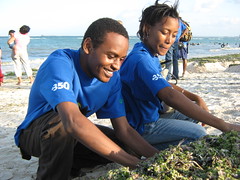
But what is the policy and political landscape for greening development? Robert Orr, the Assistant Secretary-General for Strategic Planning and Policy Coordination, explained the relevance and success of the Clean Development Mechanism in this area. About half of new energy demand and development will be in poorer countries, he said, where 2 billion people live without modern energy access or technology. About one-third of CDM projects to date have involved technology dissemination to these countries.
Orr also made the point that it might be more useful to speak generally of "technology dissemination" instead of "technology transfer." He described the latter as too much of a 1960s–70s term. Recasting the process in this light would help account for co-development, PPPs, and other projects. (While I understand his pragmatic bent here, it does seem to gloss over the justice questions at stake in climate change.)
The CDM for all its faults [PDF] is not an insignificant pool of resources, and lessons have been learned from early implementation efforts. In 2006 some $25 billion was dedicated to projects in the CDM pipeline, $5.7 billion of which went to renewable energy and energy efficiency. But it should have come as no surprise for the UN to learn that money has flowed to the biggest, most profitable projects. As Orr acknowledged, about 80 percent of the projects have occurred in just five countries: Brazil, India, China, Mexico, and the Republic of Korea. Forty-nine other countries account for only 1.5 percent of CDM projects, showing a great need for equity and capacity-building. Orr explained that the UN role should be to help harness the power of the market in a formula that ensures full participation for access to energy.
On the topic of climate ethics, Ambassador Hardeep Singh Puri of India was asked to explain why the West should help countries like India that are its industrial competitors. He answered that you can't solve global climate change without them! He also offered a somewhat rhetorical question of his own: Should the West give to the poorest countries but not to India? Puri estimated that there are more people living in India at the poverty level of the Least Developed Countries than there are total people living in those LDCs.
He said that countries like India offer potential not only as laboratories for new clean energy projects, but also as new markets for green technologies. He stressed that these investments should occur within the existing intellectual property regime (a point also expressed in Sen. John Kerry's Clean Energy Jobs and American Power Act [PDF]). "Accessing technologies" would mean paying for patents, but at affordable rates to promote dissemination of clean technologies. Relying on philanthropy and altruism will go nowhere, he said.
Puri cited renewables and even nuclear as the green technology needs of India, since India still relies heavily on fossil fuels. Biofuels are a non-starter for India in the short and medium term because of land and water shortages, concerns about food security, and commodity price volatility. Puri instead would like to see an increase in public-funded R&D projects that can lead to technology dissemination that also maximizes the common good.
Glenn Prickett of Conservation International broke implementation goals down into three priorities: Efficiency, Forest conservation, and Renewable energy. He cited a McKinsey study [PDF] showing that progress in those areas could account for 75 percent of the global emissions reductions needed by 2020, at a net savings of $14 billion! Of course, this would entail a 50 percent reduction in tropical deforestation, and one roadblock is that public investment in forestry, agriculture, and land-use policies has been dropping.
Energy efficiency solutions, according to Prickett, can be driven by effective standards backed by institutions for enforcement. He pointed out that one of the best ways an "awakening" private sector can contribute is through supply-chain analysis and waste reduction. On a related note, the Kerry climate bill also calls for a voluntary "national product carbon disclosure program," to be based on a review of existing and planned standards such as Carbon Trust's Publicly Available Specification 2050, standards to be developed by the World Resources Institute and the World Business Council for Sustainable Development, and those of the International Standards Organization.
A question was posed to the panel about why the interaction of climate change and land-use issues has been neglected relative to renewables and other investments. Orr responded that food security must be tackled in tandem with climate change, and that technology transfer for adaptation projects that deal with land use could yield huge advances at low cost. Ambassador Puri turned to the case of India, where he said 60 percent of the country lives in rural areas but only 20 percent of the country's GDP comes from agricultural investments. Why the underinvestment? Subsidies in the rich countries! Puri indicated that it's impossible to disentangle climate solutions from the inequities and stagnation of other negotiations such as the WTO Doha Round.
Indeed it is these systemic complexities and inequities that most plague the path to agreement in Copenhagen. But there is nonetheless climate solidarity that transcends national barriers, as evidenced by the massive global call to action organized by 350.org on October 24. As I wrote recently, solving climate change has great potential to serve as an organizing principle for Green Diplomacy, in a way that solves geostrategic, security, and development concerns. But it also has the potential to be a Global Green Stimulus, at a time when developing countries have been further battered by the financial failures of rich nations. Administering much of this stimulus in the form of mitigation grants or an adaptation fund is key to answering the major questions of global environmental justice.
[Photo credit: 350.org action on the beach of Dar es Salaam, Tanzania (CC).]
Thursday, April 2, 2009
Notes from Skoll World Forum
Policy Innovations friend and contributor Carol Holding recently attended the Skoll World Forum and shared some of her notes with us. She looks at the event from a brand and CSR strategy perspective:
The annual gathering at Said Business School, Oxford University, attracted 800+ social enterprise participants in social, academic, finance, corporate, and policy sectors from over sixty countries. It was perhaps the only celebration of capitalism in a country hit by "anti-capitalist warriors" protesting the G20 meetings. As Jeff Skoll, founder of the Skoll Centre noted, the mood was as effervescent as you would expect from a group of "people with a purpose who know their time has come."
Skoll, an American, was the first president of eBay and now chairs Participant Media, the film company that produced An Inconvenient Truth and Syriana. The forum was bookended by speeches from film company leaders, with an opening plenary that included Kenneth Brecher, Executive Director of the Sundance Institute, and a closing plenary with Lord Puttnam, producer of Chariots of Fire, The Killing Fields, and Midnight Express, who now focuses on education and the environment. These speakers engaged the passion of attendees while promoting the ability of video to build awareness and engage people in addressing social ills. But where was the link to building effective business organizations?
A panel on storytelling offered an explanation that should appeal to my branding colleagues: Both are opportunities for intervention. Getting people to be empathetic is the key to activation, as one filmmaker put it, to move them to consider "What would I do?" Marrying that moral imperative to a product could become increasingly important in a world where, as one delegate commented, marketing is the new fossil fuel.
Participants–To my surprise, many wore suits and some ties and had a sophisticated financial orientation, just like traditional entrepreneurs. Sessions were built around subjects like financial models, accountability and measurement, strategies for scaling and business tools such as the talk on branding. A senior editor from Fast Company bemoaned the formal dress but loved the excitement of the conference and wished the topic of social enterprise were given a special section in his magazine. No publication currently owns the space and he sees an opportunity for Fast Company.
This pro-market environment was reinforced by luxe lecture rooms in the modern Said Business School and the Oxford locations used in the evening. Dinner was held in various Oxford College dining halls—I was assigned to Keble, a truly Hogwartsian setting—and the following evening's reception was in the Examination Schools, also steeped in conservative tradition. Evening plenaries were held in the Sheldonian, a magnificent 17th century building where Oxford's honorary degrees are presented.
Sustainability was defined more broadly than the environment, and all environmental entrepreneurs had products with a social justice benefit as well. Three of the nine Skoll Awards went to organizations that had an environmental product or service. For example, I met founders of companies that produced wind turbines and solar panels, both offering low-cost or easy-to-operate products, but distributed in less developed markets.
Academia–There was a fair degree of focus on academia as Social Entrepreneurship struggles to become an accepted discipline within business schools. I spoke to faculty and deans from schools like INSEAD, Cambridge, Vanderbilt, and NYU who likened the field's awkward "adolescent-like" status to Entrepreneurship twenty-five years ago, before there were enough studies conducted and papers published to validate the field. Even the definitions are not set, and sister fields such as Social Enterprise and Social Innovation confuse and dilute the meaning of Social Entrepreneurship.
Friday, March 20, 2009
Resources on Water, Human Rights, and Business
Our colleagues at the Business & Human Rights Resource Centre have compiled (below) some great resources on water privatization in advance of World Water Day. Many experts, including Martin Khor, the new executive director of the South Centre, are indicating that water shortages will be where society first feels the pinch of a warming planet.
*********
22 March 2009 is World Water Day. In the preceding week the World Water Forum (16-22 March) and the Alternative Water Forum (20-22 March) are being held in Istanbul. Below is a range of related material focusing on private sector dimensions.
- “World Water Forum is All About Commercialising Water”, interview with water rights activist Tahir Öngür, Bıa news centre (Turkey), 17 Mar 2009
- "World Water Forum Starts with a Bang: Activists Challenge Corporate Hypocrisy", Mark Hays, Corporate Accountability International, 16 Mar 2009
- "IBM Unveils Global Innovation Outlook on Water", IBM, 16 Mar 2009
- "Preparing for Water Quarrels, if not Wars", Hilmi Toros, Inter Press Service, 15 Mar 2009
- "Chilean Town Withers in Free Market for Water", Alexei Barrionuevo, New York Times, 14 Mar 2009
- "New report highlights crucial role of water in development", UNESCO, 12 Mar 2009
- "The United Nations World Water Development Report 3 - Water in a Changing World", 2009
- "Secretary-General, in message for World observance, underscores potential of water as unifying force rather than catalyst for conflict", UN, 11 Mar 2009. Urges "Governments, civil society, the private sector...to recognize that our collective future depends on how we manage our precious and finite water resources."
- "Global Release: Water disclosure 2.0", UN Global Compact and Pacific Institute, 11 Mar 2009
- "CEO Water Mandate: Independent review of 2008 Programme of Activities" [PDF], Arthur D Little, 11 Mar 2009
- "Coalition urges UN to stop providing cover for life-threatening privatization of water", Polaris Institute, 11 Mar 2009
- Letter from 118 organizations to Ban Ki-Moon calling on him to withdraw support for CEO Water Mandate [PDF]
- "Multinationals control the agenda at World Water Forum", Water Justice, Mar 2009
Earlier relevant report: "Draft report: Business, Human Rights & the Right to Water - Challenges, Dilemmas & Opportunities - Roundtable Consultative Report" [PDF], Institute for Human Rights & Business, Jan 2009
Further materials are in the Access to water section of our site.
Friday, October 31, 2008
John Ruggie Sees Big Shift in Public Attitude Toward Govt
 Harvard Professor John Ruggie spoke at the Carnegie Council this week on the future of his project on business and human rights. Below is a short summary Carnegie Council intern Sheila Oviedo helped me put together. The big points are that Ruggie sees a dramatic shift in public attitudes in favor of government regulation, as a result of the financial crisis. Government is no longer just "the problem," in the public mind.
Also, Ruggie could see a more ethical capitalism emerging not by instilling ethics in people per se but by creating incentives based on an ethical framework. The temptation to be corrupt is too big, for example, and therefore people need the incentives to be good.
(You can listen to the audio of his talk here.)
Business and Human Rights
(Summary of the Ruggie presentation)
This week, John Ruggie, the Special Representative of the Secretary-General on Human Rights and Transnational Corporations and Other Business Enterprises, visited the Carnegie Council and shared insights not only on his mandate, but also on the way forward for business and human rights as well as ethics and capitalism in the post-crisis global economy.
The Framework for Business and Human Rights
Released in April 2008 and unanimously accepted by the Human Rights Council in June, the Ruggie report, "Protect, Respect and Remedy: A Framework for Business and Human Rights" rests on three core principles: the state duty to protect against human rights abuses by third parties, including business; the corporate responsibility to respect human rights; and greater access by victims to effective remedies. In less than a year after its release, the framework rapidly gained traction among business and human rights groups, corporations, and even governments. The Human Rights Council agreed to renew Ruggie's mandate for another three years, which allows him to move forward with operationalizing the framework.
The formulation of the Framework was, according to Ruggie, informed by three broad approaches. First was the pyramid of correlative duties adapted from the work of John Knox. The pyramid suggests that the current international human rights regime is still largely state-centered, but with no specific requirements for state compliance with human rights laws or strict enforcement mechanisms. "Where most cases (of human rights abuses) are, enforcement is weakest," Ruggie noted. The alternative is to "flesh things out at the bottom" by providing states with tools to uphold and enforce human rights law.
The second area that informed the Framework is the "collision of norms" in the international system. The system consists of clusters of laws, codes, and norms that often clash because there is no hierarchy. Human rights law, Ruggie said, does not generally trump other laws. The Framework therefore makes policy arguments rather than legal arguments to integrate human rights into business.
The third area that informed the Framework is what Ruggie calls the "political economy of human rights." There is a "vast misalignment" of corporate activities and government capabilities, which results in governance gaps. "Human rights violations are a result of these governance gaps," Ruggie noted. The Framework prescribes pragmatic measures that can be done to bridge these gaps.
In general, the Framework follows what Ruggie calls an approach of "principled pragmatism." It is guided by the principle to strengthen the current human rights regime and is pragmatic on how to get there, he explained.
The New Mandate
Ruggie's extended mandate from 2008 to 2011, presents an opportunity to operationalize the Framework at both the state and corporate levels. At the state level, he aims to offer governments useful tools to be able to monitor and enforce human rights law through a range of mechanisms such as a country's investment policies and corporate laws.
At the corporate level, Ruggie aims to push companies to carry out their commitment to human rights. Companies say they respect human rights, he said, "but most of them don't have (systems) in place to prove they are respecting human rights." In the next three years, Ruggie's challenge is to inspire companies to operationalize the corporate responsibility to protect human rights to mitigate further rights abuses.
Another key challenge is to improve public access to remedial measures. "The need for judicial remedy is the most problematic," Ruggie acknowledged. Hence, the Framework prescribes alternative non-judicial remedial mechanisms in areas where judicial mechanisms are weak or in cases where companies can deal with complaints in an objective manner.
The Future of Business and Ethics
Ruggie sees the current global financial crisis as a catalyst for a shift in attitudes toward globalization and regulation. He expects increased government regulation in the post-crisis future, and perhaps more acceptance of the significant role of government and the state in the economy.
The post-crisis era has room for ethical financial capitalism, but only if ethics is used as a basis for developing new incentives. Ethics can't be relied upon to balance an incentive structure that encourages excess and irresponsible risk-taking.
Wednesday, December 5, 2007
Co-operative Food Ethical Policy
In this video clip from a Guardian climate change conference, Paul Monaghan, head of ethics and sustainability for the Co-op Group, speaks on how businesses can use long-term power purchase agreements for renewable energy, help scale up microgeneration of electricity, improve energy efficiency, get involved with public policy in a positive way, and use carbon offsets.
Monaghan's passion led me to investigate the Co-op Group a little more, and I found that they are developing a new member-led ethical policy for the food they sell. "Going forward the ethical and environmental priorities that underpin our co-operative products will be in line with members' concerns," writes Guy McCracken, Chief Executive for Food Retail at Co-op. They've developed a questionnaire to figure out what those concerns are and how to prioritize them. The questionnaire covers food quality, diet and health, environmental impact, ethical trading, community retailing, animal welfare, metrics for success, and future member consultations.
I'd say meeting half of these targets would be admirable. Does the co-op as an organizing principle give them an advantage?
Saturday, June 23, 2007
China Revisionism Already (Again)?
China was a threat because it was weak in the 1980s. Then it was a threat because it was strong in the late 1990s. Is it time again for a revision of the world's thinking again on China? I have noticed a steady increase in the number of informed observers talking about China's weaknesses rather than its strengths, making James Mann's thesis that China could be a "model" a bit dated. See Mann's Washington Post essay "A Shining Model of Wealth Without Liberty" here.
These days, informed observers inside and outside China are talking about pollution, food safety, income gaps, environmental degradation, slave labor, and income disparities... and lack of equity and ethics in China. Just today, the IHT ran an editorial called "The China puzzle" here. The piece is typical of this latest revisionism on China:
"...The latest reminders are reports of slave labor in Chinese factories and the discovery that some of the popular Thomas the Tank Engine toys manufactured in China have lead in their paint. Before that, it was the contaminated dog food, the stubborn support of Sudan for its oil, the regular reports of human rights abuses, the huge economic disparities between city and country, the controls on the media.
Why rehearse these faults now? Because governments and companies tend to become so seduced or intimidated by China that they won't hold it to high standards of human rights and business ethics.
Western companies have been so anxious to transfer manufacturing to China's cheap factories that they have been happy to close their eyes to what else goes on over there - just as Google or Yahoo were happy to assist in repressing information to get a toe into the Chinese market, or as Washington and other Western capitals compete in trying to please visiting Chinese leaders..."
We will probably see many revisions in our understanding of China. Clearly, reality falls somewhere in the complicated, complex middle.
Tuesday, June 19, 2007
Ethics Case Studies Needed at B-Schools
The Wall Street Journal ran an interview with London Business School senior fellow Craig Smith, who also leads a project with the European Academy of Business in Society to get CSR into mainstream business courses. Smith says the biggest obstacles to getting MBA courses to teach ethics effectively is a lack of case studies, which business schools often use as a main part of their curriculum in general.
"We did an audit and found that about 1,000 cases out there with something on corporate responsibility, but many are not usable because they're dated or because social responsibility is only tangential to the case," Smith said.
Smith also said many professors simply feel reluctant discussing ethical issues because it is out of their "comfort zone," but he recommends professors use discussions to spark debate.
Getting people to think about ethics is what the Carnegie Council is all about. Our program Global Policy Innovations publishes Policy Innovations online magazine, which features innovative solutions to ethical problems in the context of economic globalization. We have a section devoted to these Innovations here. You could call them case studies in global civil society solutions.
Our program has also launched a workshop series that serves as a dialogue between corporations and civil society. At these workshops, participants learn about corporate and civil society approaches to shared ethical problems. Read about and listen to the first iteration with BP, GE, the Business and Human Rights Resource Centre, and the Interfaith Center on Corporate Responsibility here.
 |
 |
 |
 |
 |
 |
 |
 |
 |
 |
 |
 |
 |
 |
 |
 |


